

White River Restoration

Four landmark projects that build on partnerships to benefit fish and industry.
"We welcome this cooperative effort to restore salmon habitat and reduce flood risks because it will use innovative designs that foster the dynamics of a large healthy river." - Jeremy James, Chair, Muckleshoot Indian Tribe Fish Commission
“Our job is to protect fish, habitat and the environment for future generations. The Tribe is happy to be part of long-term, collaborative solutions that benefit us all.” --Bill Sterud, chairman of Puyallup Tribal Council
A REGIONAL DISCUSSION
In the center of the vibrant Puget Sound region, one stretch of the White River through Sumner poses challenges for wildlife, for infrastructure and for the regional economy. In 2015, the State of Washington invested $824,000 for Sumner to lead a dialogue group regarding a small stretch of the river.
It became a full comprehensive plan of four companion projects for the full stretch of the White through Sumner.
DECADES OF CONTROVERSY
The White River’s flow sparked a 100-year-old fight that involved two counties, a lawsuit and even dynamite. The river now flows against its natural course through Sumner. At the time, dredging and Mud Mountain Dam offered protection against flooding.
Times have changed.
LASTING SEDIMENT
Sediment and debris continue to wash down Mt. Rainier from the headwaters into Sumner, posing hazards for endangered species and high risk of flooding during even normal rainstorms.
COMPREHENSIVE SOLUTIONS

Stewart Road Bridge $30,000,000
CONSTRUCTION STARTED - updates @ Stewart Road/8th Street White River Bridge | Sumner Connects
Replacement bridge is higher & wider, allowing river to migrate, improving vehicular traffic flow and connecting regional trail system.
Levee & Point Bar $59,474,432
NEEDS FUNDING
Formerly two separate projects, these combined will restore 45 acres of riparian habitat and creates floodwalls to protect the regional manufacturing center with over 16,000 jobs and national distribution. Almost all property acquisition is complete.
Habitat Project $65,118,848
CONSTRUCTION STARTED
Phase 1 Construction Complete. Phase 2 work to complete habitat sections started. Phase 3 will complete work related to the trail relocation.
Restore 200 acres of former golf course (owned by City of Sumner) creating side-channels and wetlands as large storage area for floodwaters plus additional habitat for ESA salmon

Before and After transition after Phase 1 work.
RETURN ON INVESTMENT
Confirmed Funding: City of Sumner, State of Washington, Pierce Co Flood Control Zone District, Puget Sound Acquisition and Restoration Fund, Salmon Recovery Funding Board, Floodplains by Design, Puget Sound Regional Council, FMSIB, Port of Tacoma
Assessed Value of Properties Currently Threatened by Flooding: $1.14 billion (not counting equipment, inventory or proprietary technology housed inside facilities)

POWER OF "AND"
In this scenario, everyone wins: salmon and other species get improved habitat; the region gets flood protection, shoring up the local economy; a regional trail system gets connected and transportation infrastructure improves.
Protect Pierce County’s largest manufacturing center--16,000 jobs in aerospace, production and distribution--from devastating floods.
Enhance habitat for endangered species, including salmon, and supporting the overall health of Puget Sound.

-
Sumner Link Trail
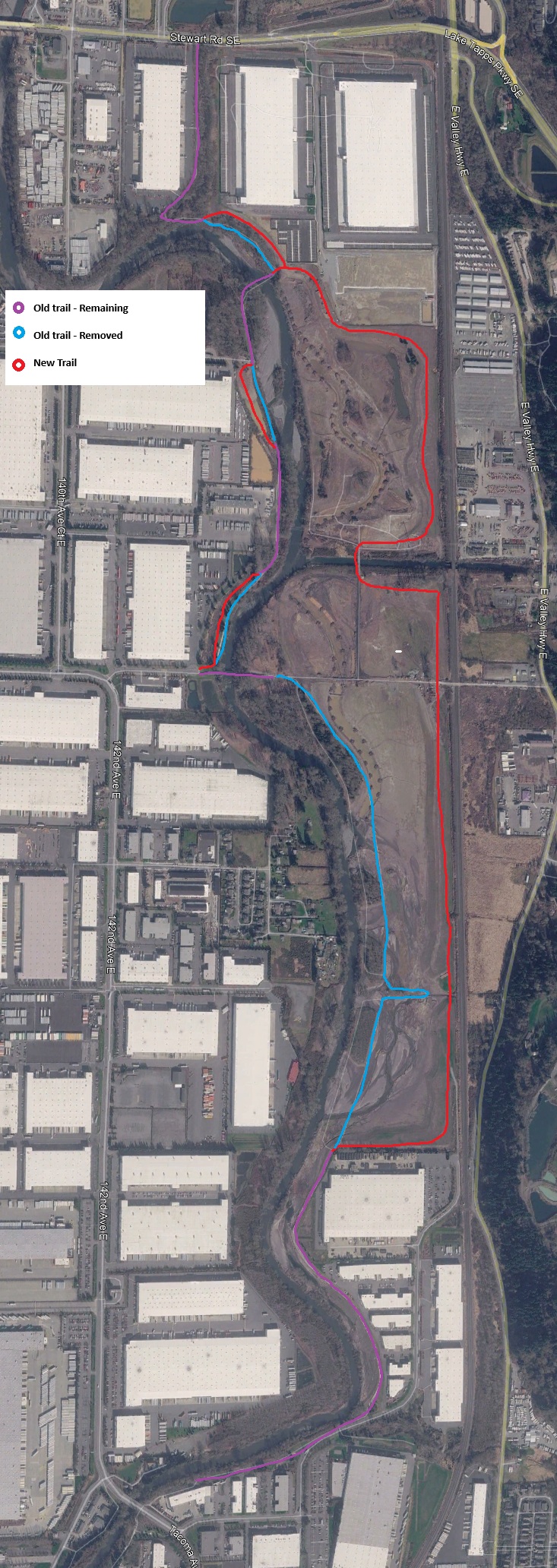
As we near the end of the project we also near the re-opening of the Sumner Link Trail, though it'll look a little different. The biggest change in the route is you'll no longer be able to ride the trail across the 24th street bridge, but you'll still be able to access 24th via 16th. Trail amenities and map updates are in route, and exact opening date will be provided once know. For now, we expect it to fully open in Q1 of 2027 or sooner.
-
Channel Connections
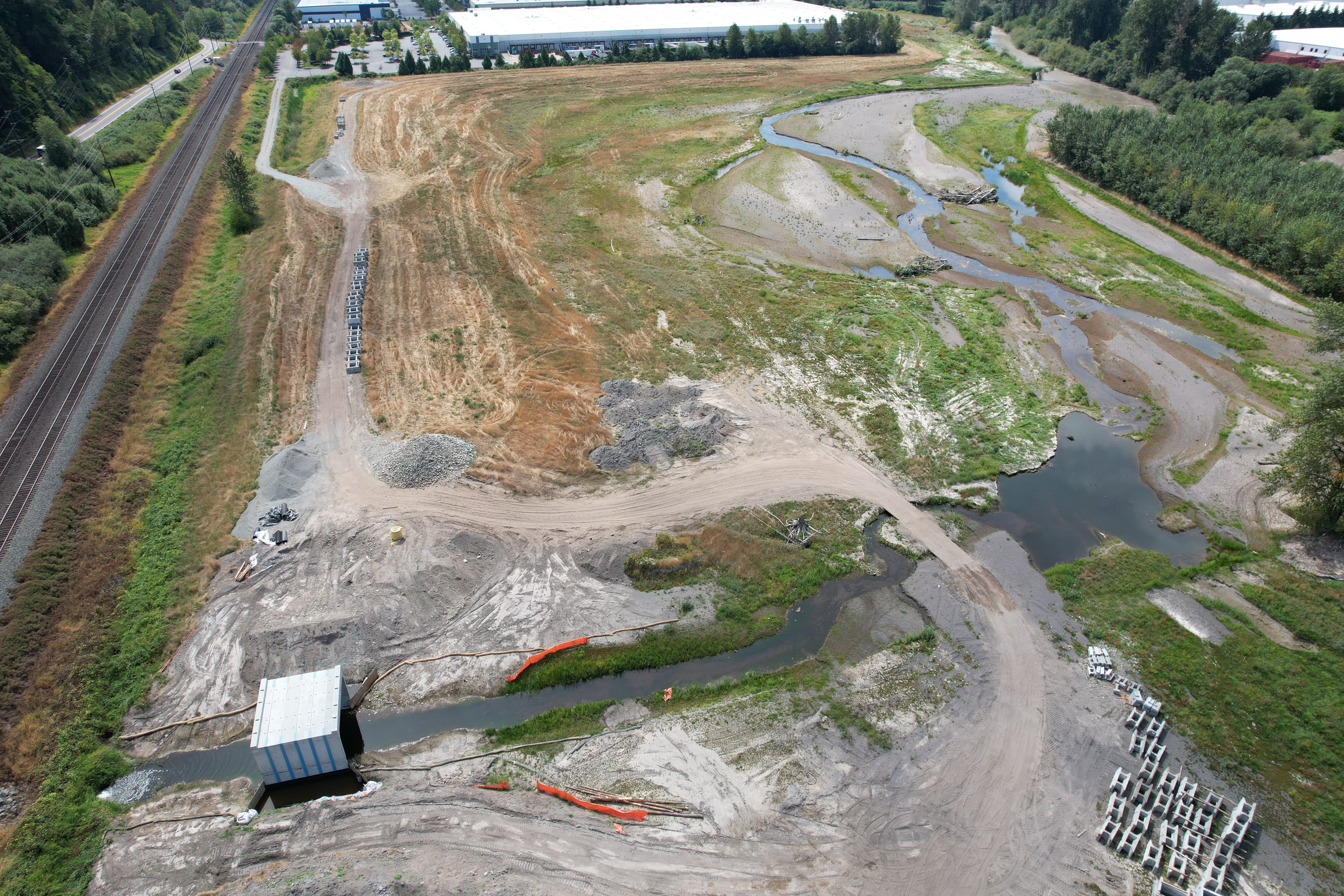
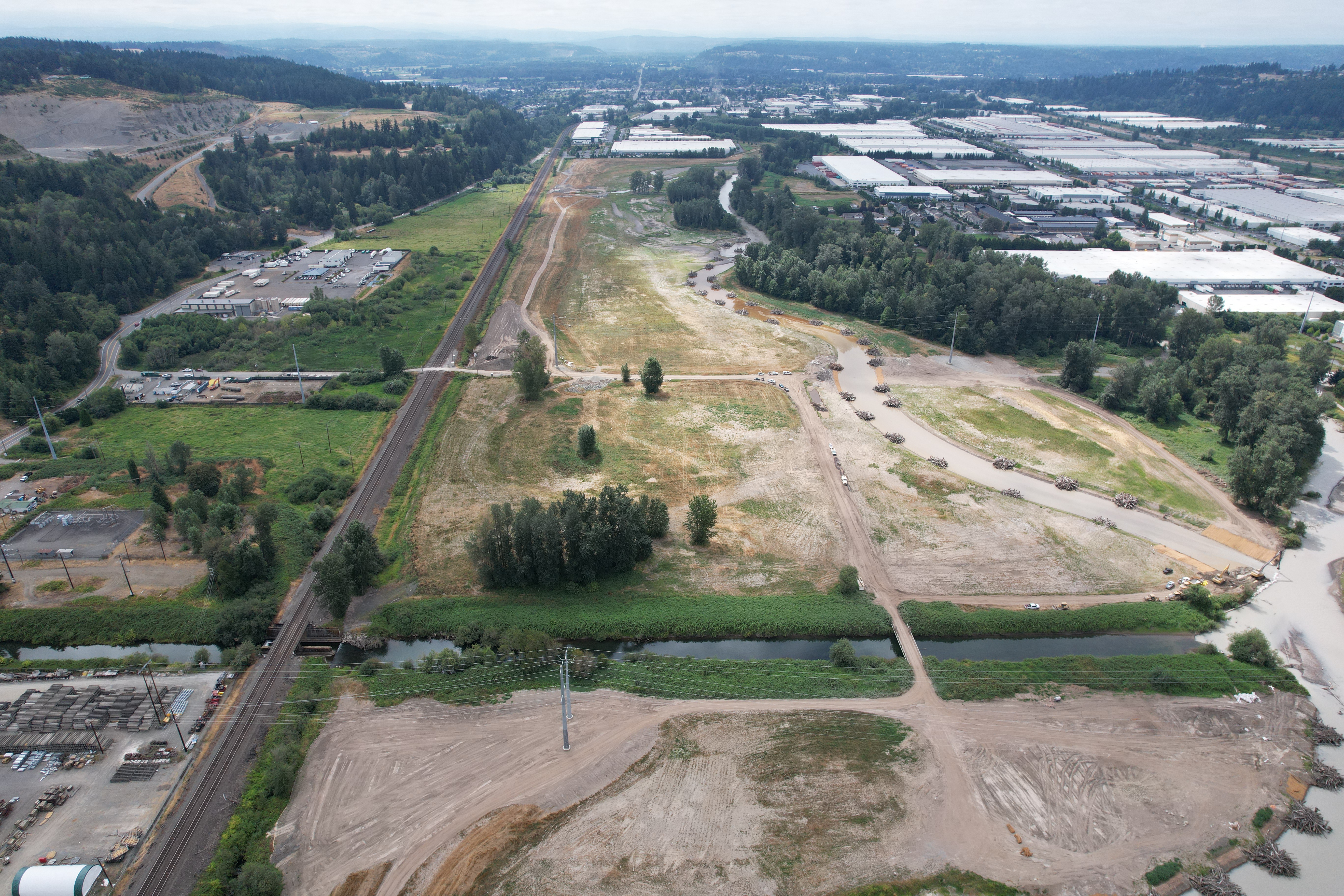
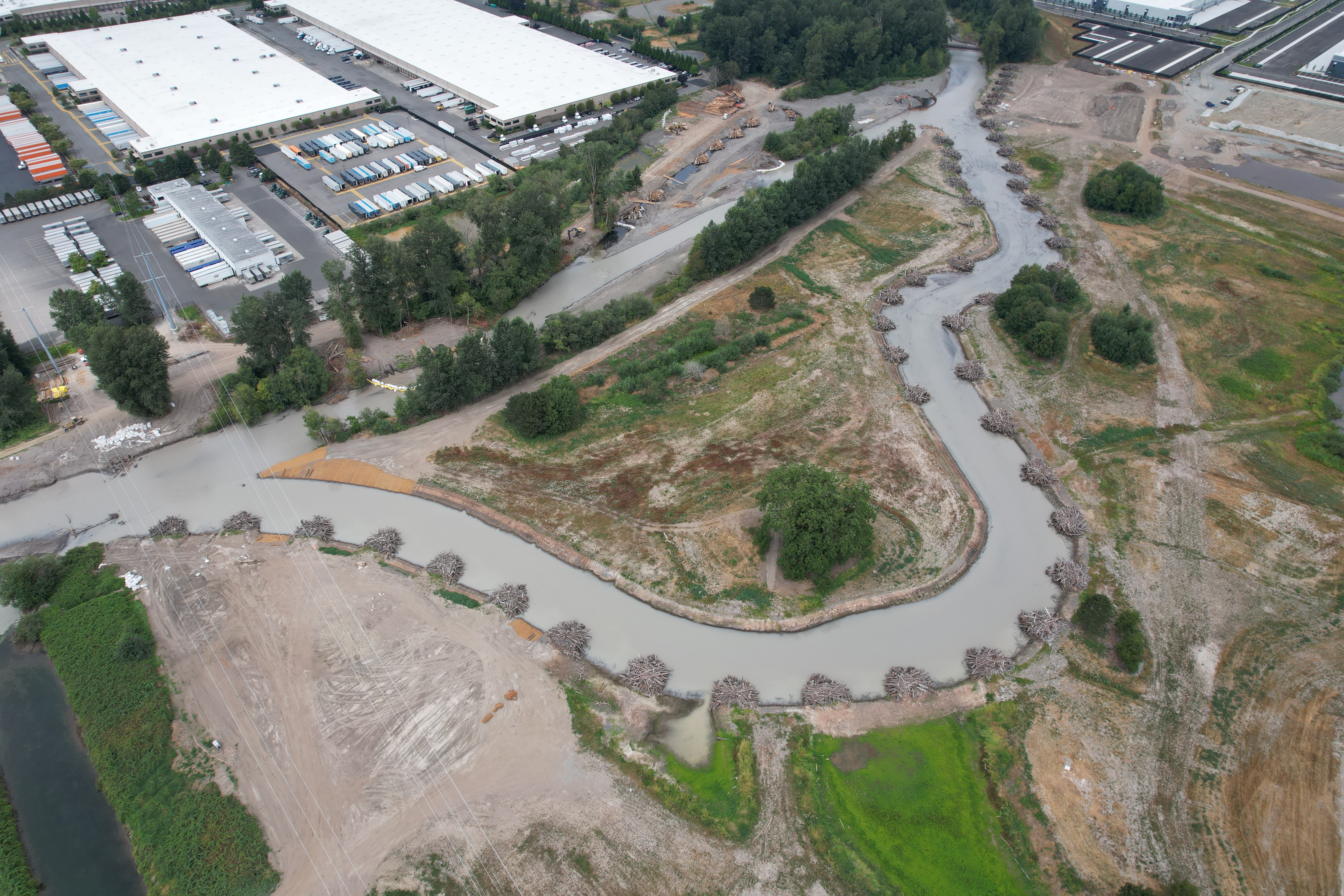
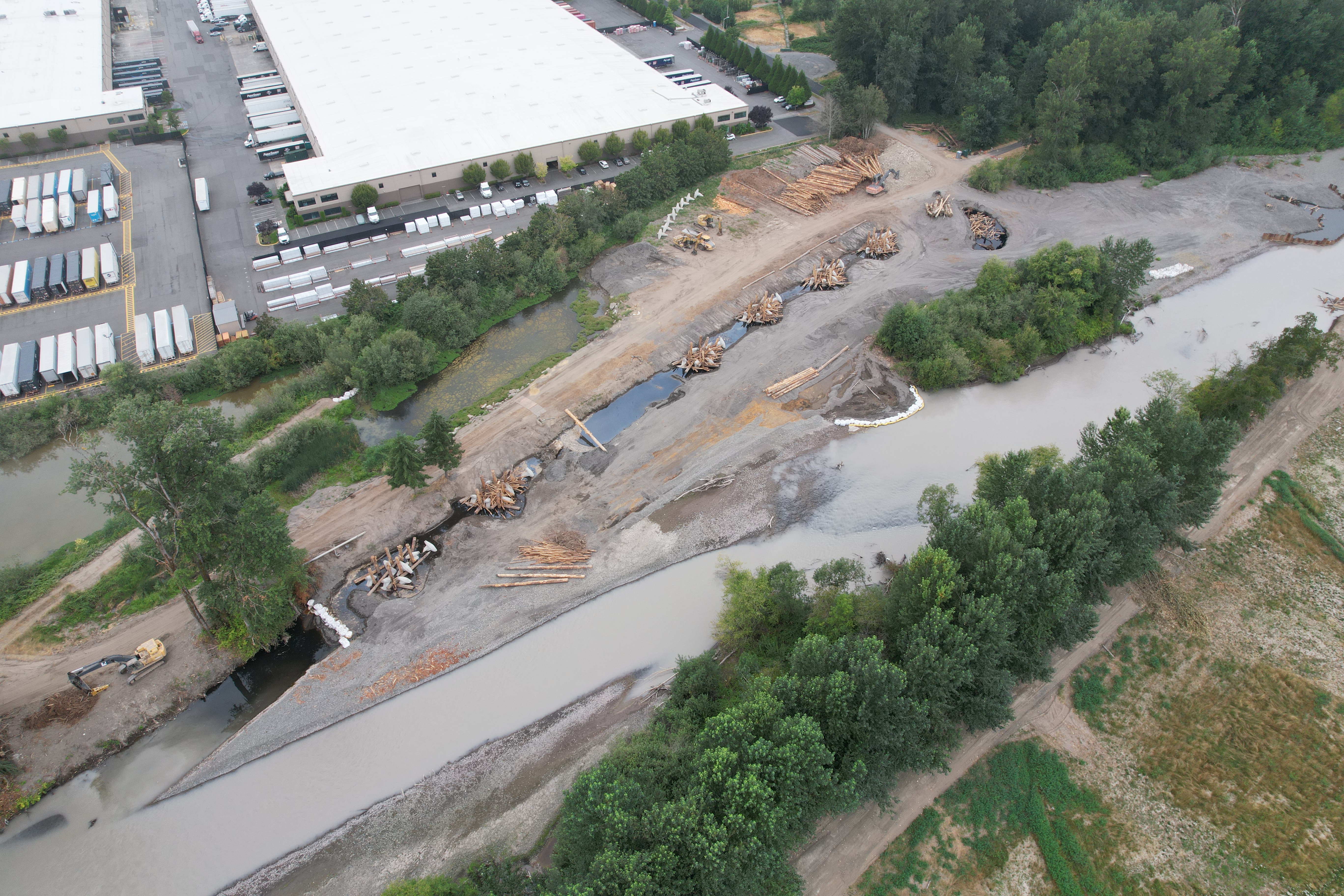
This year is the final year for the projects in-water work, and the biggest milestones have been completed. To date, we have constructed 120 wood structures that contain over 1,300 wood piles, replanted 107 acres, and installed 15,000 cubic yards of streambed gravel.
-
Planting and Utilities
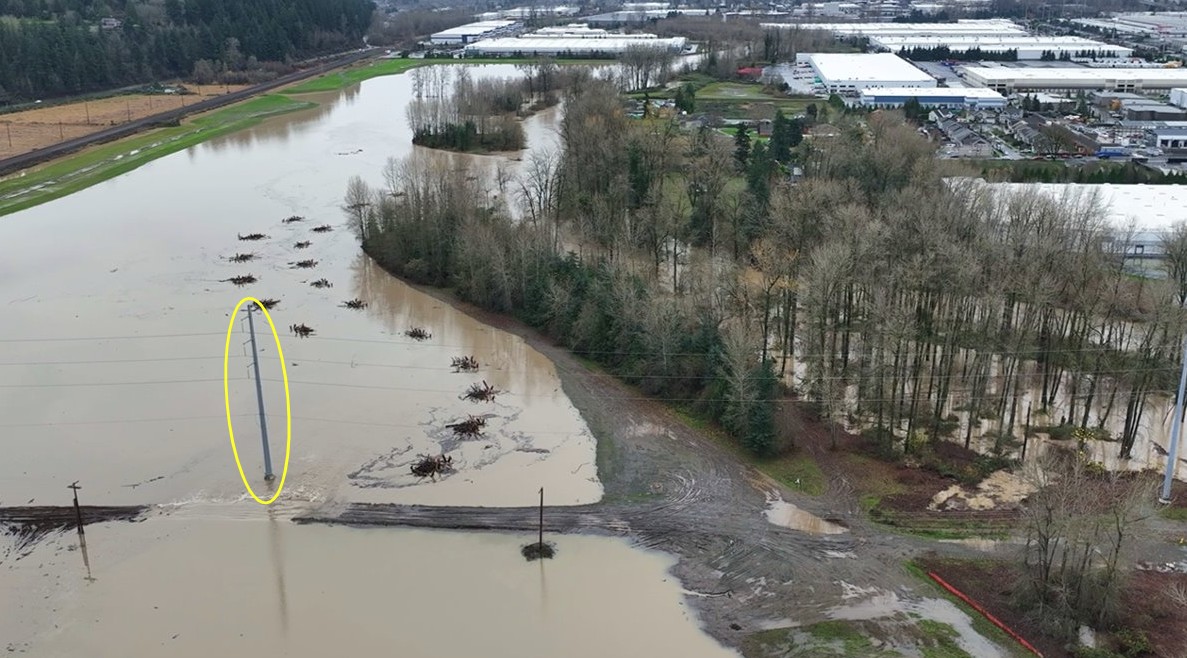
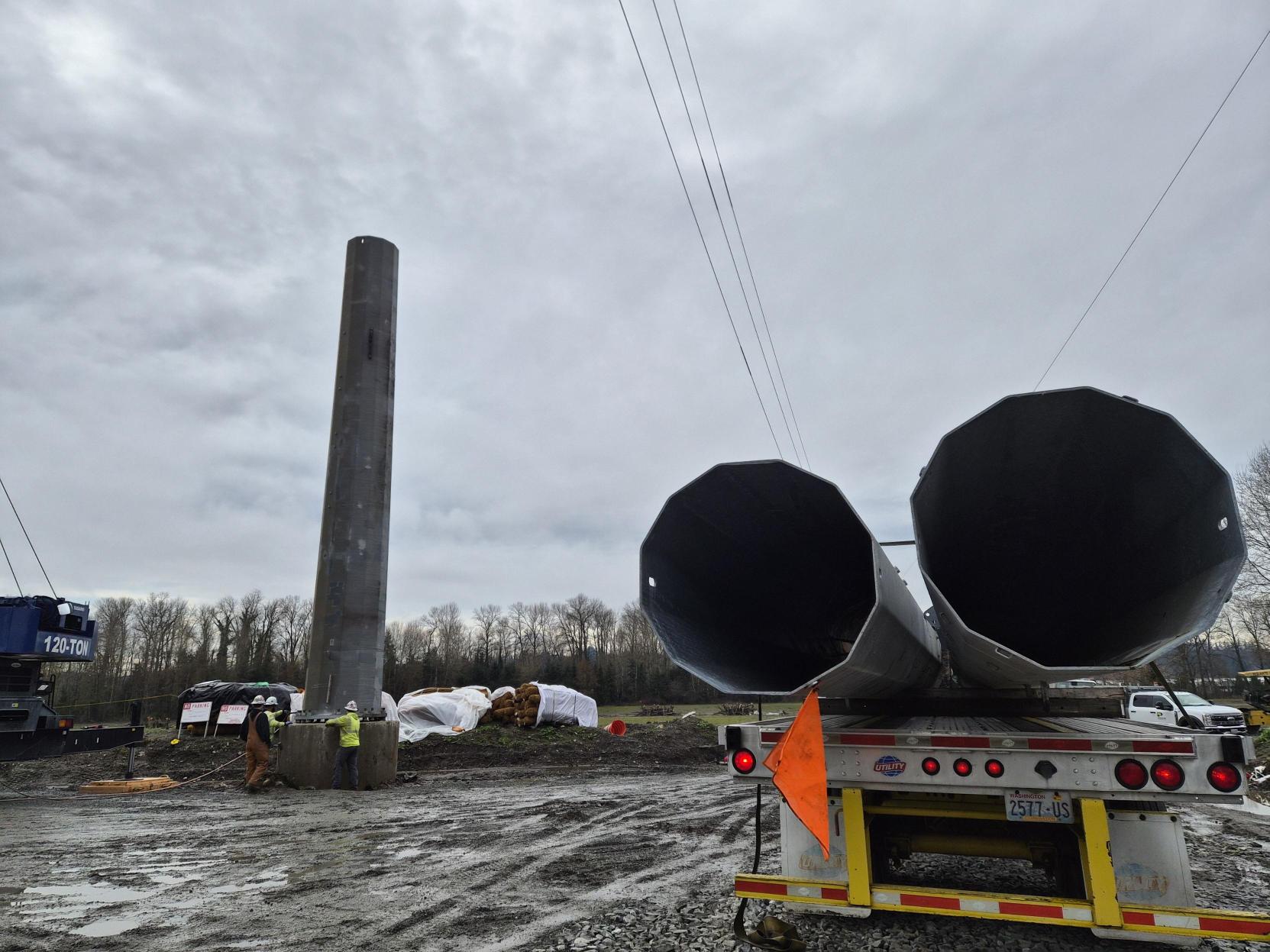
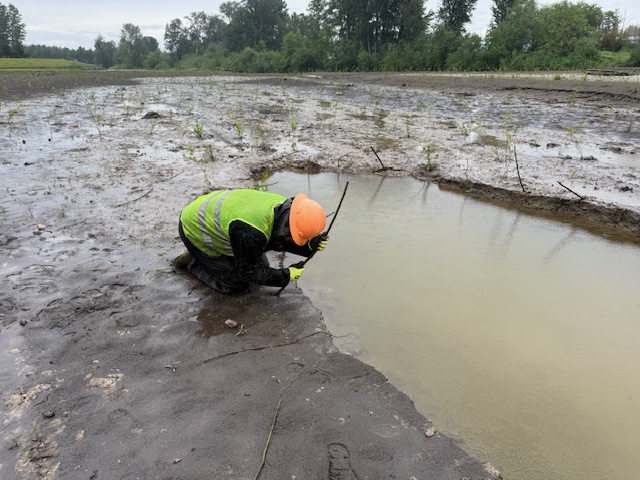
Just a quick update - while we await the 2026 fish window, the only work occurring is the relocation of critical power to a safer location outside of our new floodplain and the planting of trees. The project has relocated water, sewer, gas, power, and communication lines. The final pieces are these transmission poles. Once done, we can work to complete the connection of the middle river side channel later this year. The planting is additionally occurring now. We have over 500,000 plants which will be installed between this year and next. Rodarte and their sub-contractor Ash Creek and working on the first batch of these plants now.
-
Beyond the flooding and into year 3
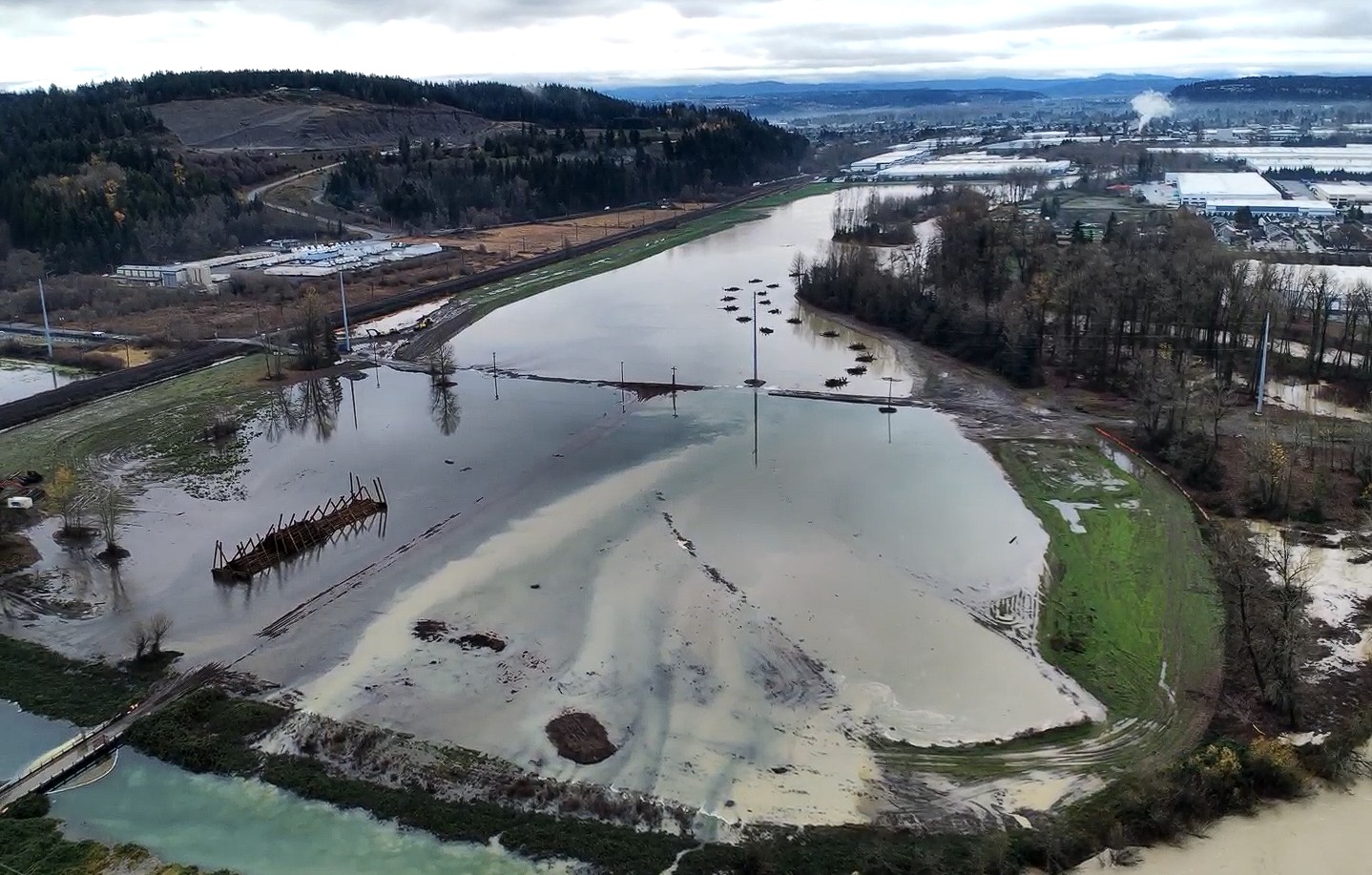
The flooding in December was significant, but due to the work completed on the project prior, the outcome was much better than it otherwise would have been. With nearly 1 million cubic yards of dirt removed from the floodplain, additional storage was created, reducing overall flood heights and minimizing the impact on local residents and businesses.
While the project provided a clear benefit, it wasn't fully prepared for that volume of water. Several areas of plantings were not yet established, leaving the ground vulnerable to erosion. We will repair these areas during the coming construction season and add additional wood structures in some higher risk areas. As this phase of the White River Restoration project reaches completion and work begins on future phases, we expect to see an even greater reduction in flooding risk.
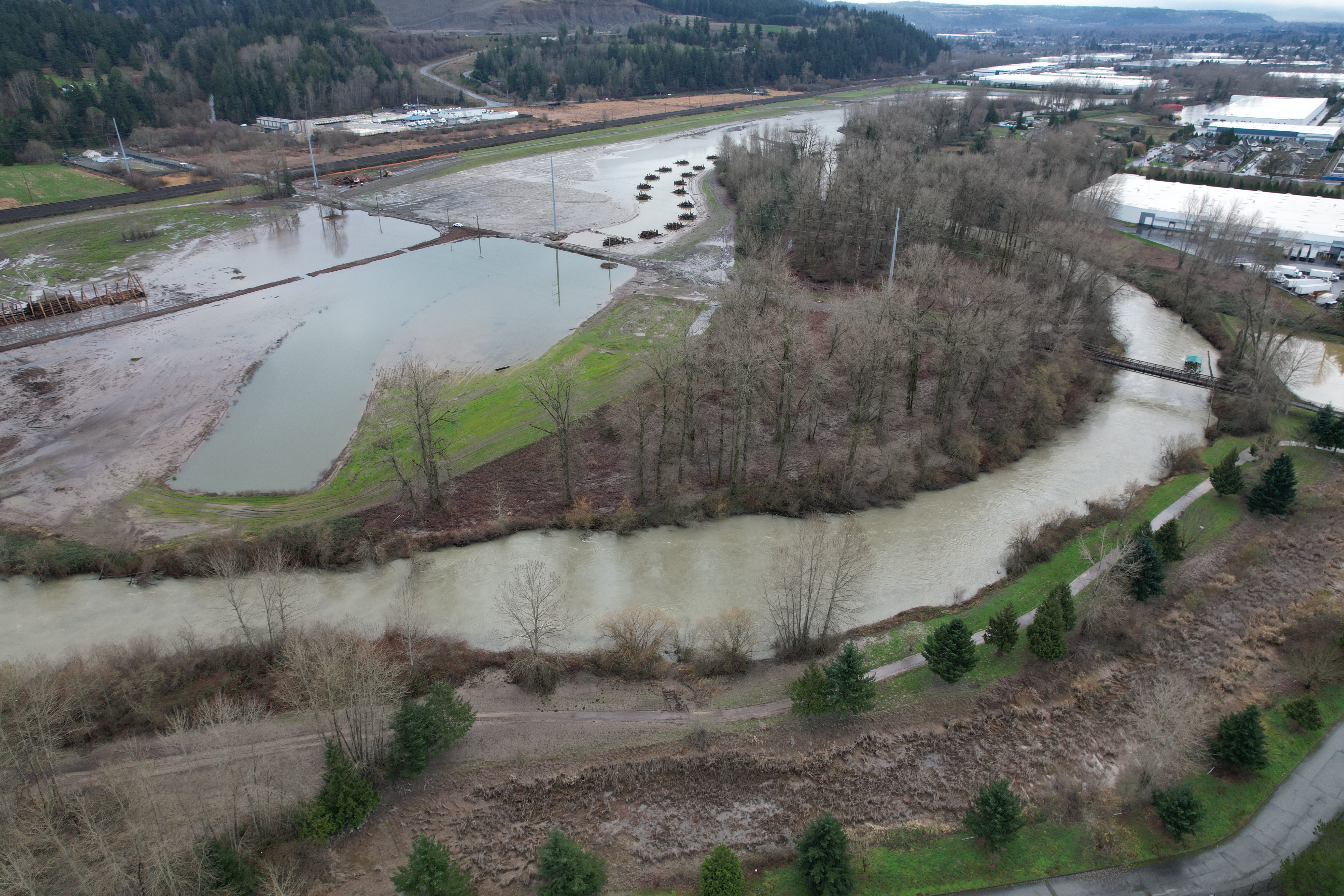
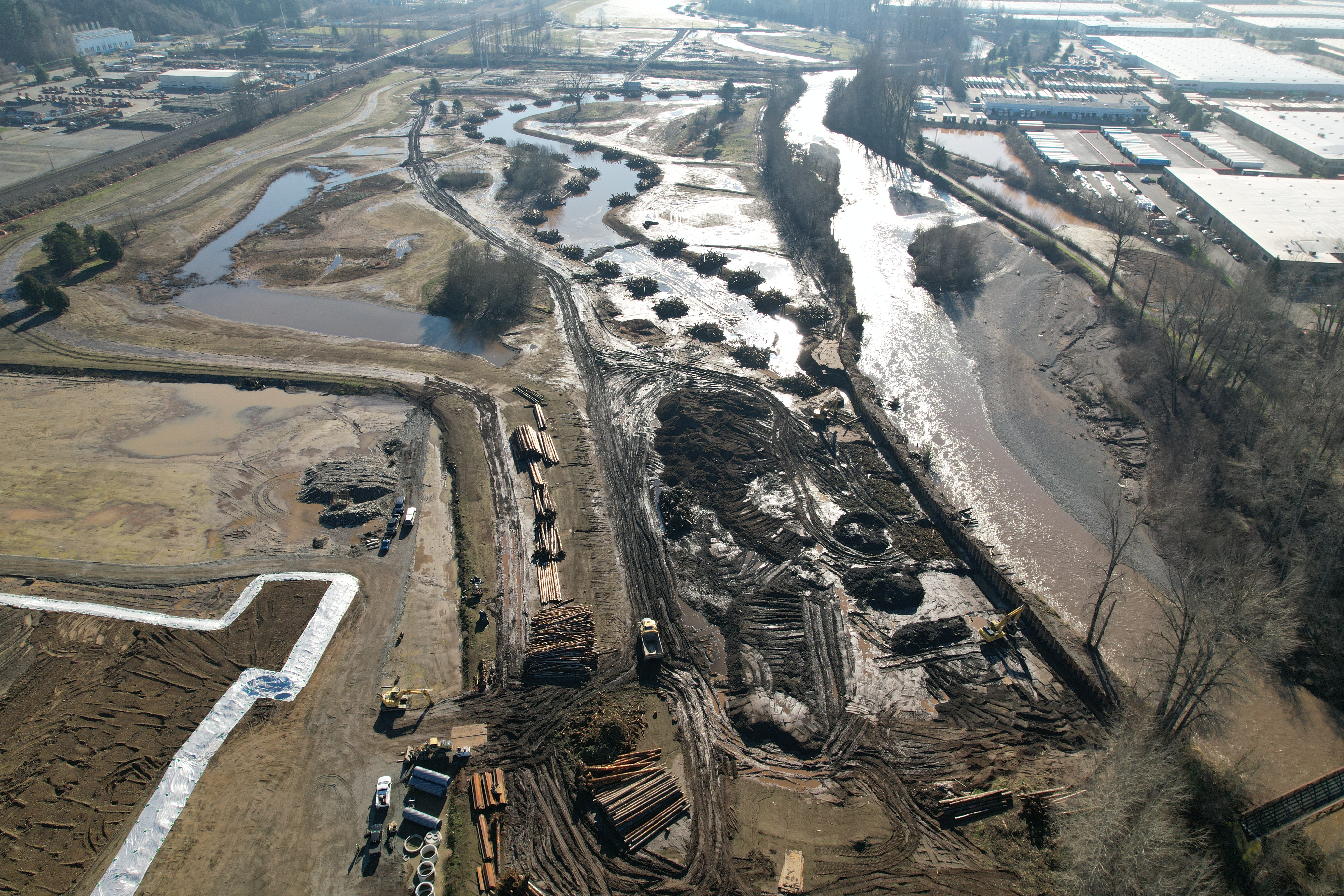
See below for some photos of 24th Street in December and January, and then north of 24th in late January when the contractor got back to working on wood structures. More to come as we move into our 3rd and possible last construction season for the habitat phase.
-
Near the End of Year 2 Construction
At the start of this year's construction, I shared some aerial photos in another post. Well, we've been working for several months and as the weather turns the season is nearing the end. Thanks Parametrix for getting us some new aerial photos as shown below. Even though the main construction is coming to an end, much of this area is slated to be planted over the next several months with thousands of trees. More updates to come.
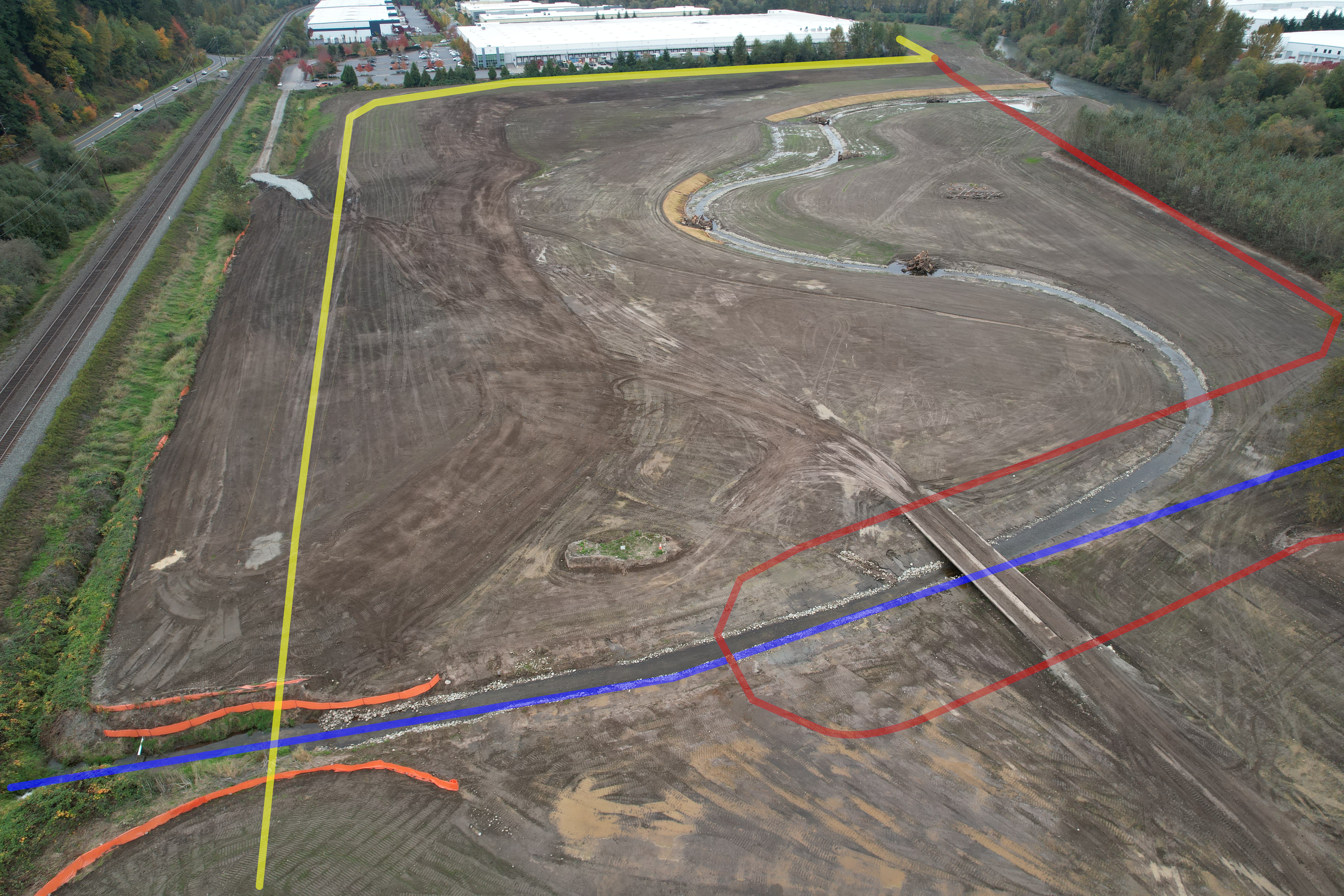 Former #9 Ditch section, note the red / blue are approx. the old trail/channel and the yellow will be the new trail. We have already had Salmon in the new channel.
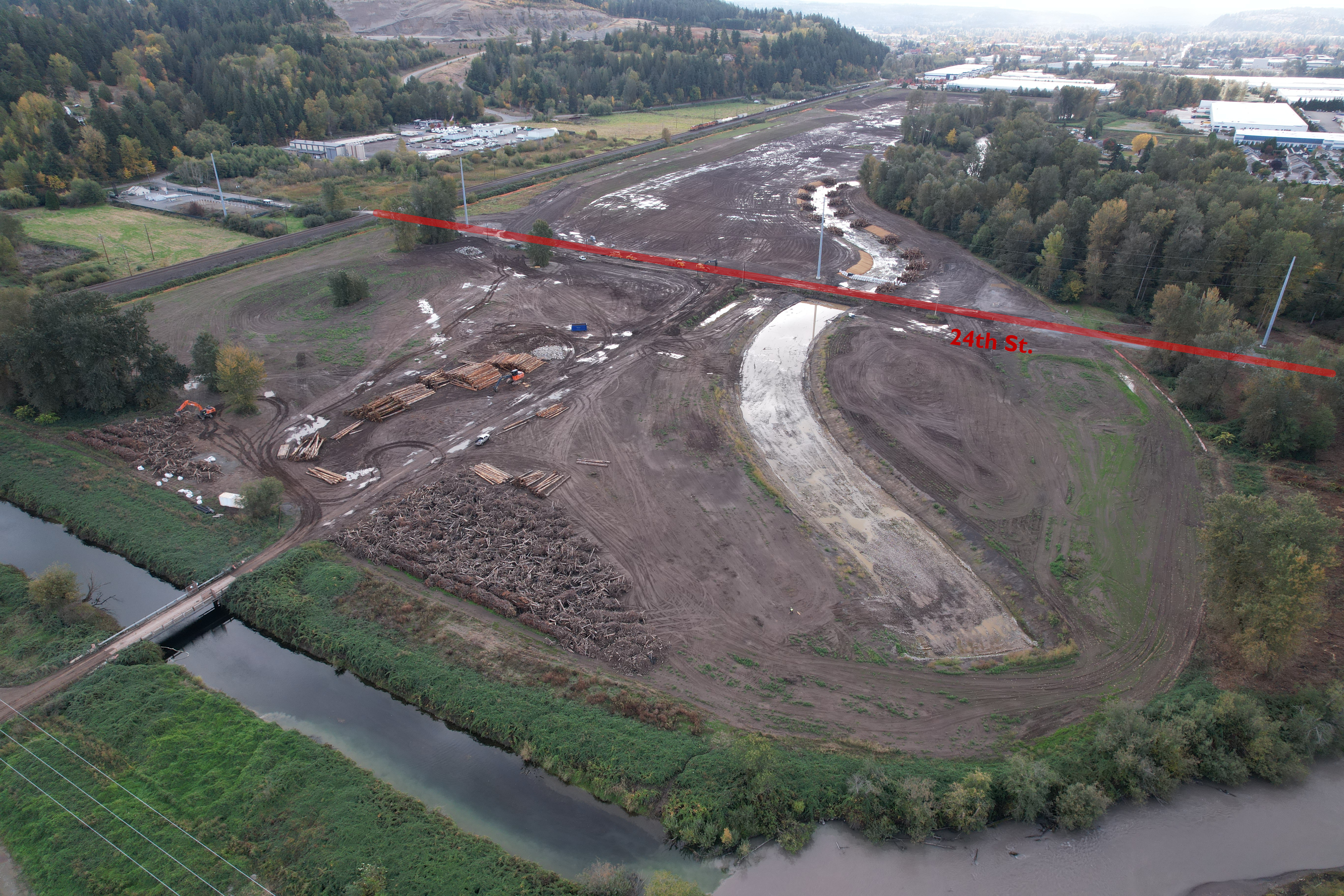 This is the center channel, you can see where it'll connect to the river in the future.
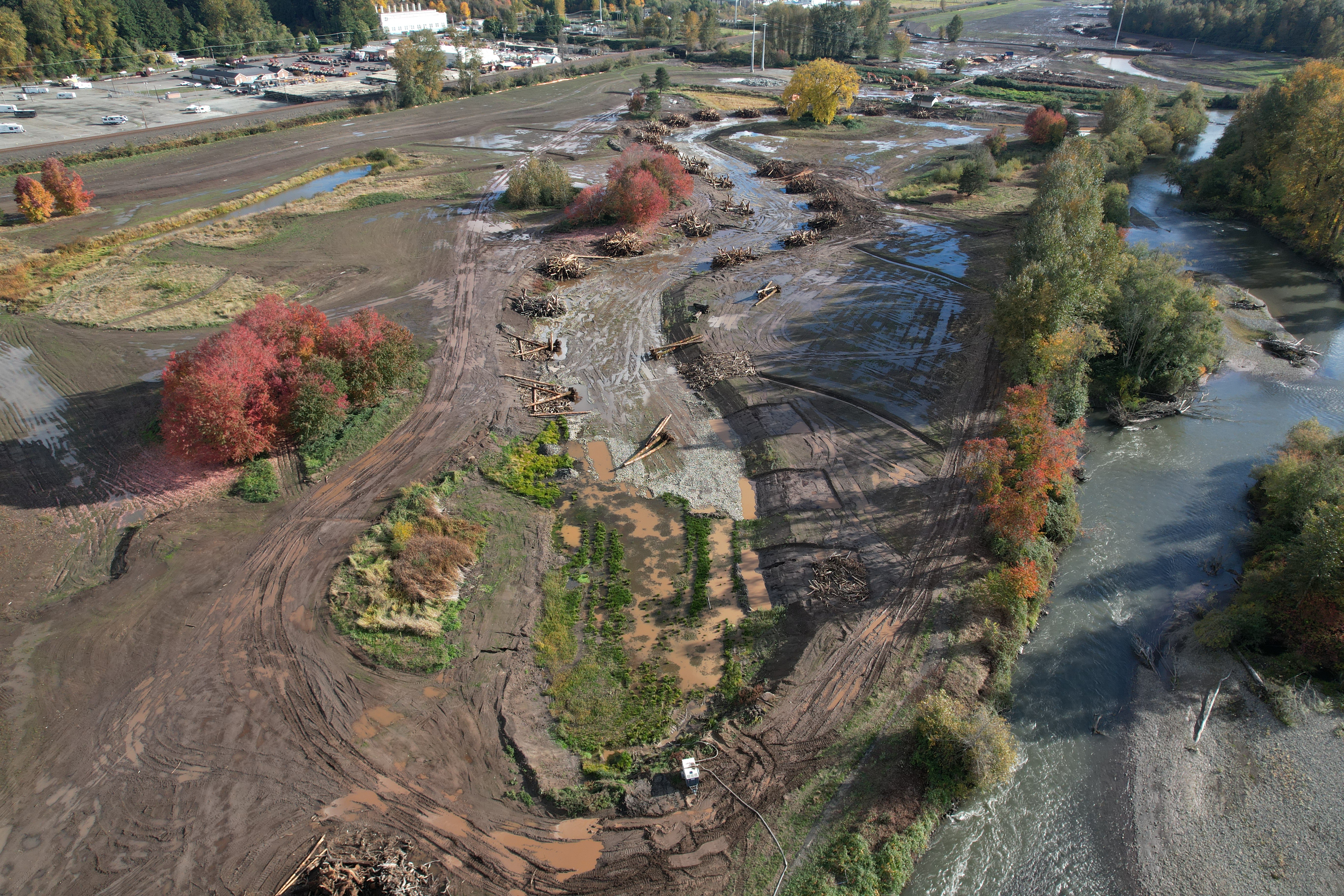 Here's the northern channel through the golf course. You can see the big black walnut tree with its fall colors. This will also be connected to the river in the future.
 -
Working in the River
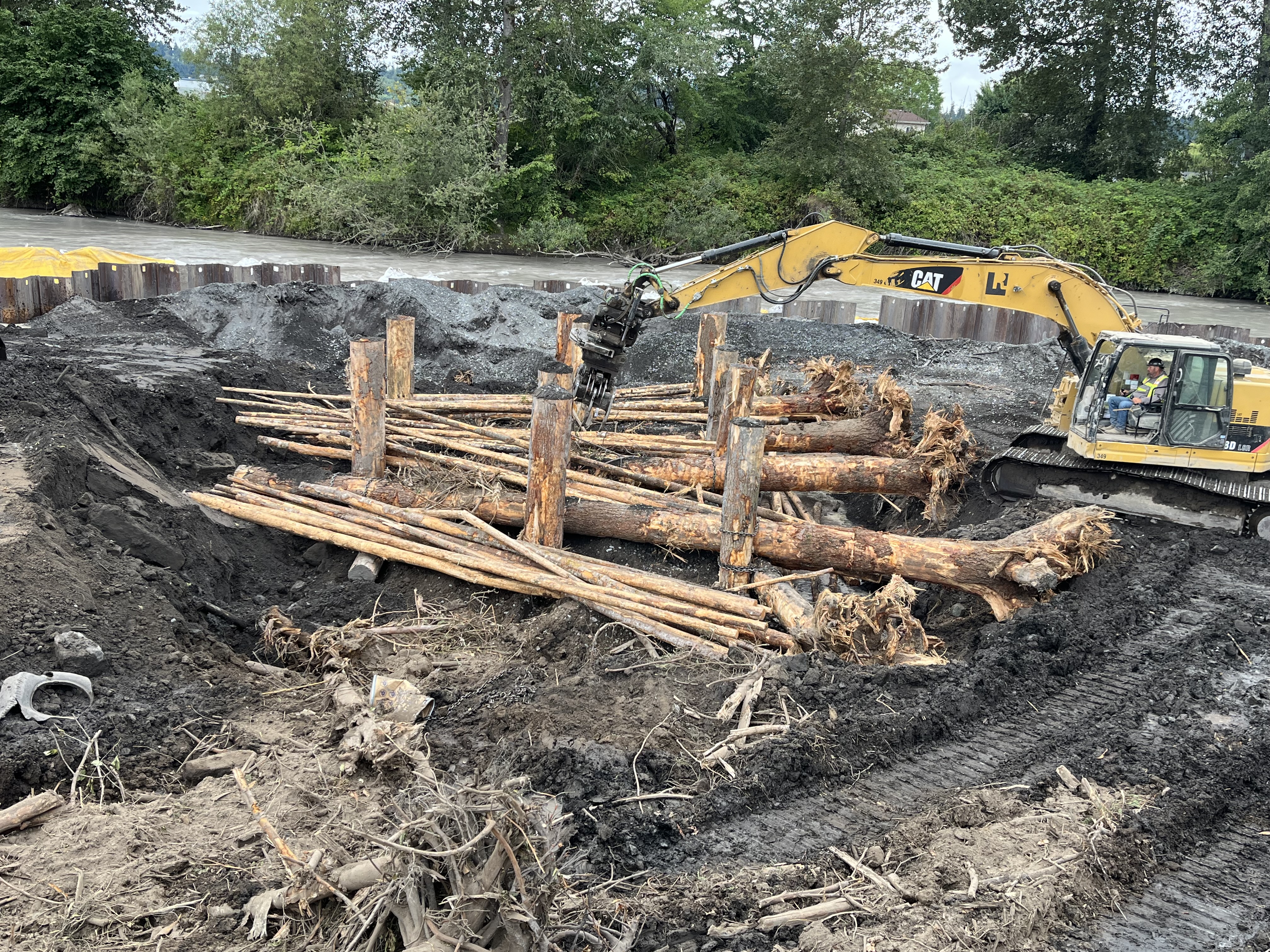
With one of the primary goals of the project to split the river and push floodwaters out into the project area, we're installing large wood log jams in the existing main channel of the White River. The last update talked about the benefit of large wood in a project like this, but an additional benefit these in-river structures provide is channel roughness.
If you think of the river like a water slide, when it's smooth and clean the water would flow fast. If you add a second equally size water slide, but don't add more water, both slides would flow slower and shallower than the first. To avoid that, we're narrowing and roughening the main water slide (river channel), so it stays just as deep when we take away part of the flow into our new channel.
In-water work comes with its own challenges. First, we have to isolate ourselves from the river so we can work in a dry area. Then we need a team of fish biologists to capture and remove any trapped fish from the isolated area. Finally, we can pump the river down and get to work.
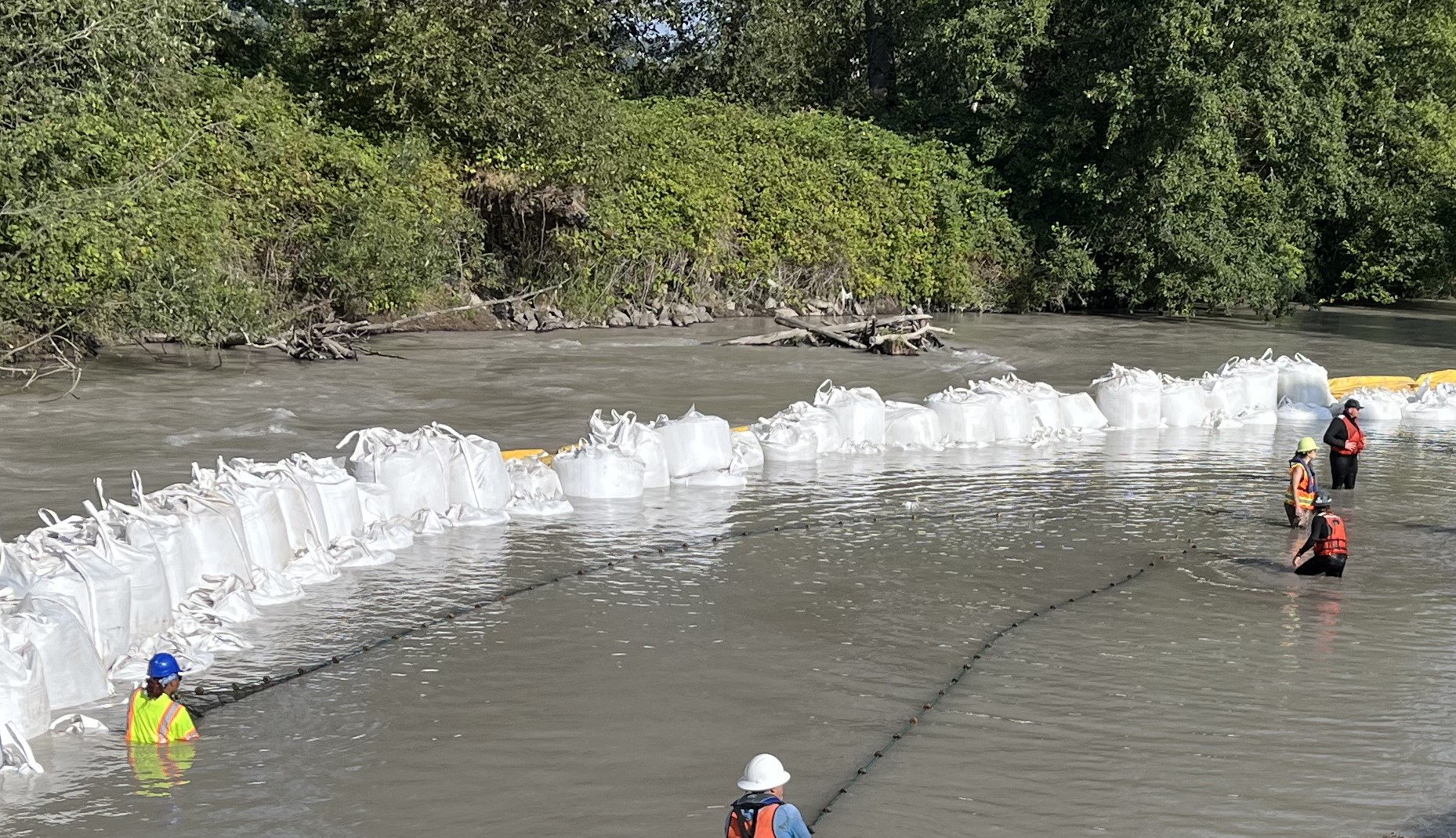 Fish Biologists capturing fish in the work area
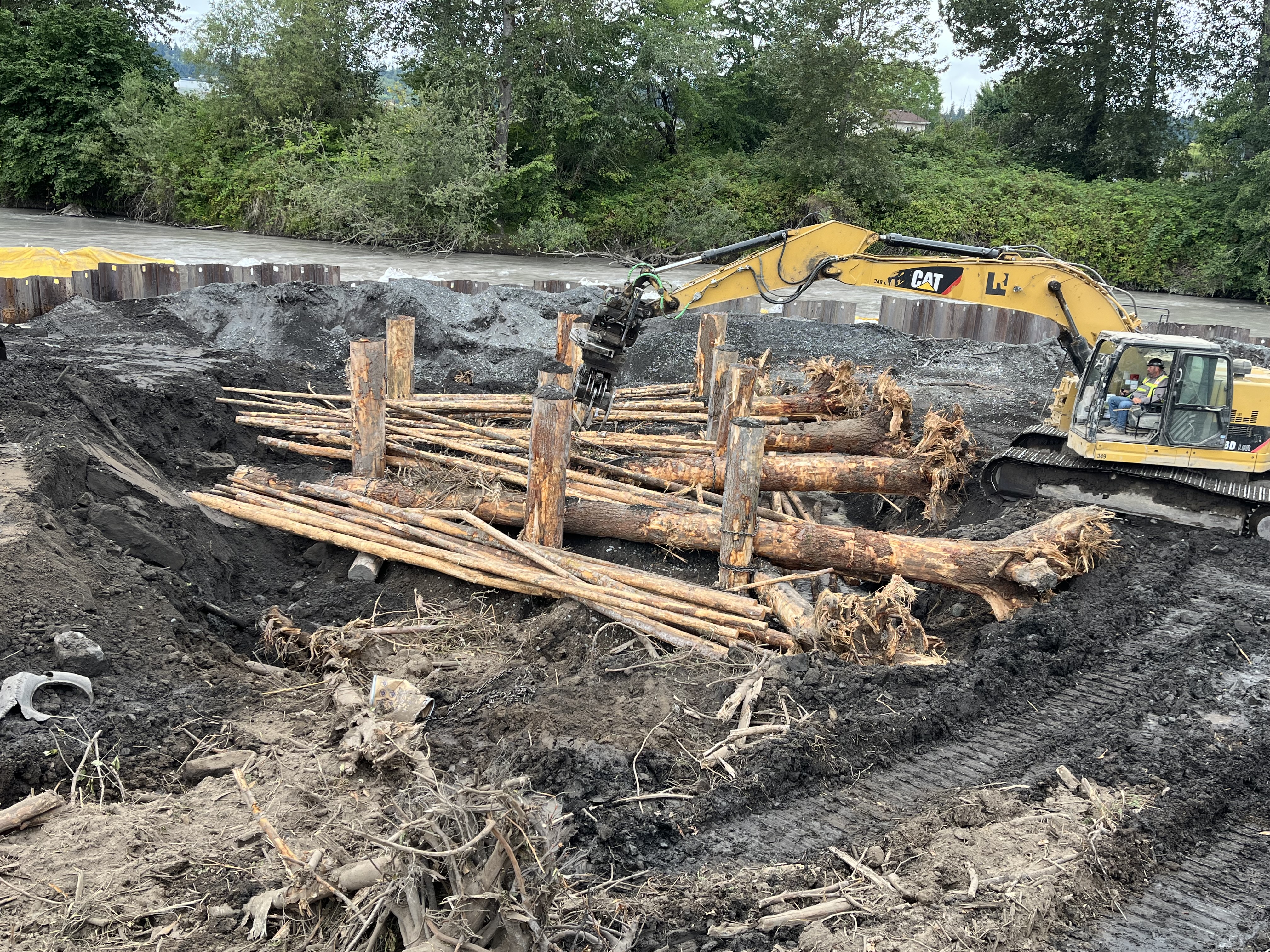 Log jam being created. Much if this is below the riverbed
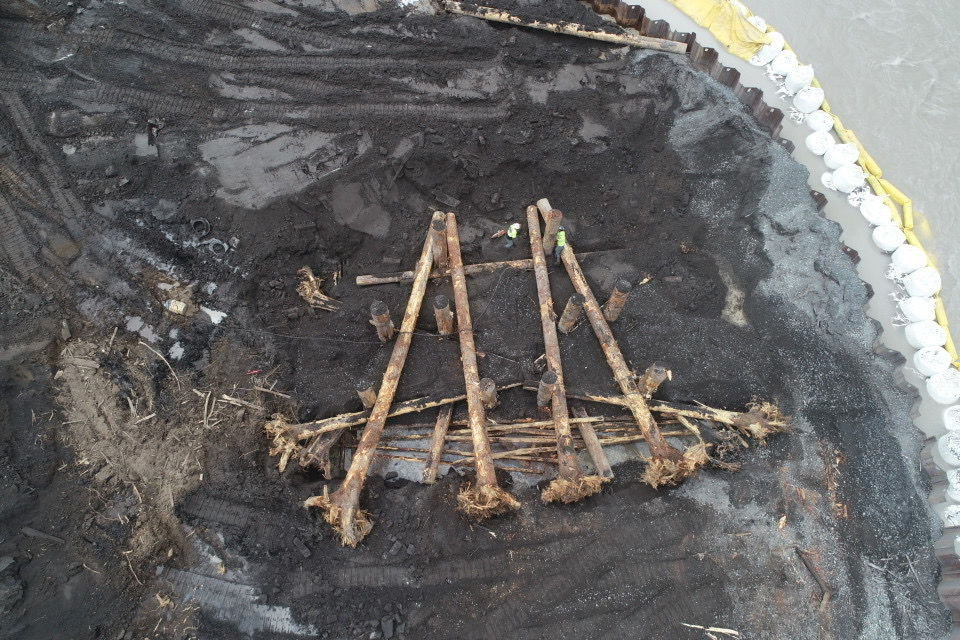 Aerial view of the log jam being constructed
 -
Large Wood Structures

Large wood structures have been going in, and you may have seen them if you've been on the north end of the trail. What are they, and why are they important?
The kind being built now is a structure built entirely from natural materials; other types of structures are supported with chain and other materials like dolos (more on those at a later date).
Here's why they're important:
- Protection from Erosion: Placed on the banks of the newly built river channels, the structures help keep the channel from eroding while giving time for plants to establish.
- Creates Diverse Habitat: Large wood helps to form deep pools and gives space in between the wood that offer salmon resting places during migration and safe nurseries for young salmon to feed and grow, protected from strong currents, and predators.
- Provides Food: Decomposing wood releases nutrients, fueling the aquatic food web that feeds young salmon.
The project will install around 130 large wood structures and drive more than 1300 wood piles.


-
Aerial Photos - Start of Phase 2 Construction

Our inspector with Parametrix shared these initial photos from the air. Phase 1 completed 2024 left the project in this state. Phase 2 will complete the work to connect the channels shown here in addition to installing large wood, plants, and more.


-
Trail Impacts

The existing Sumner Link Trail through the project is closed. The area where the existing trail is located is one of the first areas which will be excavated since it is closer to the river (we did almost all we could without closing the trail summer 2024). The unaffected sections of trail will remain open, and the contractor will work to avoid closing the section between 24th and 16th as long as possible. Please find alternate routes.
When the trail is replaced in 2027, it will be higher and further from the river. This will reduce both the risk of river erosion (which we’ve seen in sections) and flooding (which we have closed the trail for in the past). See the mockup of the before and after below.
 Current Trail
 Future Trail
-
Notice to Proceed

Phase 2 of the White River Restoration has begun and is the largest phase of the overall project. The contract was awarded to Rodarte Construction who received notice to proceed May 1st, 2025. Construction will last until 2027 and will have impacts to the public primarily through trail closures. 200 Acres of floodplain will be reconnected to the White River for the 1st time in over 100 years.


-
 Sumner’s White River Restoration will protect thousands of jobs from flooding while enhancing over 200 acres of habitat for endangered species. Find out more about this unique project and its partners.
-
PSAR features three of their recent/currently funded projects, including Sumner's White River Restoration projects.



-
Phone 253-299-5708 Email robertw@sumnerwa.gov
-
Late 1800s
White River Restoration has finished this stageFarmers use dynamite to keep diverting the river north or south to avoid flooding.

-
1906
White River Restoration has finished this stageA flood finally diverts the White River into the Stuck River, flowing through Sumner instead of up into King County.

-
1913
White River Restoration has finished this stageA major lawsuit between Pierce County and King County drags on for years. Final 100-year agreement keeps river diverted through Sumner.

-
Late 1970s
White River Restoration has finished this stageDredging is no longer accepted as a flood control measure due to its impact on endangered salmon
-
2009
White River Restoration has finished this stageFlooding closes Stewart Road for days, threatens infrastructure and endangers national/international business supply chains.

-
2010-2015
White River Restoration has finished this stageContinued build-up of sediment in the river turns even normal rainfall into flooding risks.
-
2015
White River Restoration has finished this stageThe State of Washington gives Sumner a $824,000 grant to form a discussion and partially design solutions for both flood protection and habitat restoration on a portion of the White River in Sumner.

-
2016-2019
White River Restoration has finished this stageThe Dialogue Group grows and designs four companion projects as a comprehensive solution to the full stretch of the White River through Sumner, exceeding the State's scope while staying in budget.
-
2019
White River Restoration has finished this stageFunding to date totals $76,986,990 with funds from
- Floodplains by Design
- City of Sumner (land value)
- City of Sumner Stormwater
- City of Sumner Water Utility (water rights mitigation funding)
- City of Sumner Sewer Utility
- Pierce County Flood Control Zone District
- Stewart Road Bridge funding
-
2019-2020
White River Restoration has finished this stageCity of Sumner and BNSF finalize design.
Build more funding partnerships and seek opportunities including
- Federal Funding
- Legislative Assistance (State)
- Recreation & Conservation Office (State)
- Puget Sound Acquisition and Restoration Fund (State)
- Salmon Recovery Funding Board (State)
- Floodplains by Design (State)
- Department of Ecology (State)
- Community Grants (Port of Tacoma)
- Golf Course Sale (City of Sumner)
-
2020 - BNSF Partnership
White River Restoration has finished this stageCity of Sumner finalizes partnership with Burlington Northern Santa Fe (BNSF) Railroad. This involves a 10-track project alongside the Restoration area. BNSF purchases city property, contributes $10 million to project, removes 1 million yards of dirt that would have had to be removed anyway to build channels, and participates in joint application to U.S. Army Corps of Engineers.
-
2020-2021 - PSAR Opportunity
White River Restoration has finished this stagePuget Sound Partnership ranks the White River Habitat project third on the Puget Sound Acquisition and Restoration (PSAR) funding list for projects of regional significance. Recommendations go to the 2021 State Legislature for confirmation and funding.
-
2021-2022
White River Restoration has finished this stageWith PSAR funding, the Habitat Project is fully funded and goes into construction.
-
2022
White River Restoration has finished this stageIn preparation for excavation of the floodplain at the habitat project site, utilities are being relocated along 24th Street.
-
2023
White River Restoration has finished this stageBoth the Water and Sewer utilities have been bored underneath the future floodplain. The contractor is starting to work on the new sewer station and install the new water tie-in.

-
2023
White River Restoration has finished this stageUtility Relocations are complete! The new sewer lift station is up and running and the utility relocation portion of the project is substantially complete.
-
2024
White River Restoration has finished this stageProject design is finalizing for the large 170+ acre restoration project. The advertisement for construction bids is expected to go out in Q1 2024, with early construction in Summer of 2024.
-
2024
White River Restoration has finished this stagePhase 1 earthwork is out to bid (https://mrscrosters.bonfirehub.com/opportunities/138603). This work will excavate and move 150,000+ Cubic Yards of material during the 2024 construction season.
-
Phase 1 Complete
White River Restoration has finished this stagePhase 1 completed October 2024, over 350K cubic yards of material from the future channel and floodplain excavated.

-
Phase 2 out for bid!
White River Restoration has finished this stageThe Phase 2 project is advertising and bids are opening on March 24th.
-
Construction has Started!
White River Restoration is currently at this stageConstruction was awarded to Rodarte Construction. They've begun work as of May 1st, 2025. Construction should last until 2027. Follow the page and scroll to the bottom for updates as construction progresses.


